Troides darsius
IUCN Red List Status: Endangered (EN)
The Sri Lankan Birdwing is threatened by habitat loss due to deforestation in the lowland wet zone. Our plantation boundary represents critical habitat for this magnificent species.
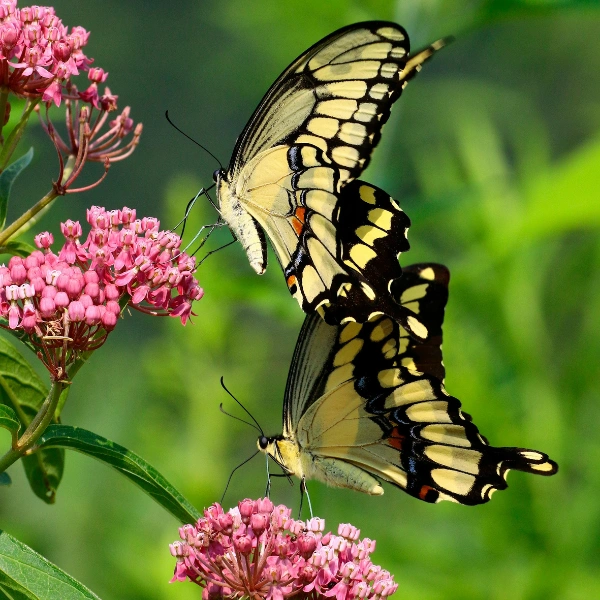
The Sri Lankan Birdwing (Troides darsius) is one of Sri Lanka’s most spectacular butterflies and the largest butterfly species found on the island. This endemic species is characterized by its massive wingspan, brilliant golden-yellow hindwings, and distinctive velvety black forewings.
First described by Eduard Friedrich Eversmann in 1843, this magnificent butterfly belongs to the birdwing family (Papilionidae) and is found exclusively in Sri Lanka’s lowland wet zone forests, including the Sinharaja Rainforest, where our plantations are located.
At Knuckles Valley Conservation, we have documented this species regularly along our plantation boundary, making our site one of the most reliable locations for observing this endangered butterfly in its natural habitat.
Wingspan: 140-190mm
Large bodied butterfly
Field Identification: Look for the distinctive slow, flapping flight pattern at canopy level or along forest edges. Males are unmistakable with their brilliant golden-yellow hindwings contrasting with jet-black forewings. The body is bright red with a black head.
The Sri Lankan Birdwing is restricted to Sri Lanka’s lowland wet zone rainforests, occurring from sea level to approximately 1,000 meters elevation. Primary habitat includes:
Key Locations: Sinharaja Rainforest, Kanneliya, Kottawa, Peak Wilderness, and our Knuckles Valley plantation boundary.
Feeding: Adults feed primarily on nectar from various flowering plants, showing preference for Lantana, Mussaenda, and various wild forest flowers. Males are territorial and patrol forest edges and clearings.
Host Plants: Larvae feed exclusively on Aristolochia species (pipevines), particularly Aristolochia indica. The caterpillars are distinctive with fleshy tubercles and are toxic due to aristolochic acids from their host plants.
Reproduction: Females lay eggs singly on young leaves and shoots of host plants. Development from egg to adult takes approximately 60-75 days depending on conditions.
Defense Mechanisms: Both larvae and adults are distasteful to predators due to toxins sequestered from host plants. Bright coloration serves as warning (aposematic) coloration.
IUCN Status: Endangered (EN) – Population declining due to habitat loss
Primary Threats:
Conservation Actions at Knuckles Valley:
| Total Sightings | 45 |
| Last Sighting | Nov 20, 2025 |
| Peak Season | Mar – May |
| Population Trend | ↓ Declining |
| Protection Level | High Priority |